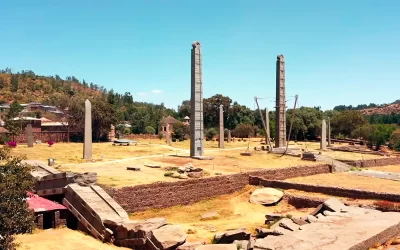
Ras Dashen Trek: 10 Days Through the Simien Mountains to Ethiopia’s Highest Mountain
Price
Duration
Tour Highlights
- Journey into the Danakil Depression, one of the lowest and hottest places on Earth.
- Pass through the town of Berhale, a key stopping point for camel caravans.
- Observe long camel caravans transporting salt blocks to the highlands.
- Witness the traditional salt mining at Ragad (Asebo).
- Explore the bizarre, colorful, and otherworldly landscapes of Dallol (116 meters below sea level).
- See the salt formations, sulfuric springs, and Lake Assal.
- Experience a unique night of camping in Hamed Ela, a traditional Afar village.
Gondar → Sankaber → Gich → Imet Gogo → Chenek → Ambiko → Ras Dashen → Eastern Simien → Gondar
Walk deeper. Climb higher. Experience the Simien. Ras Dashen is more than a summit.
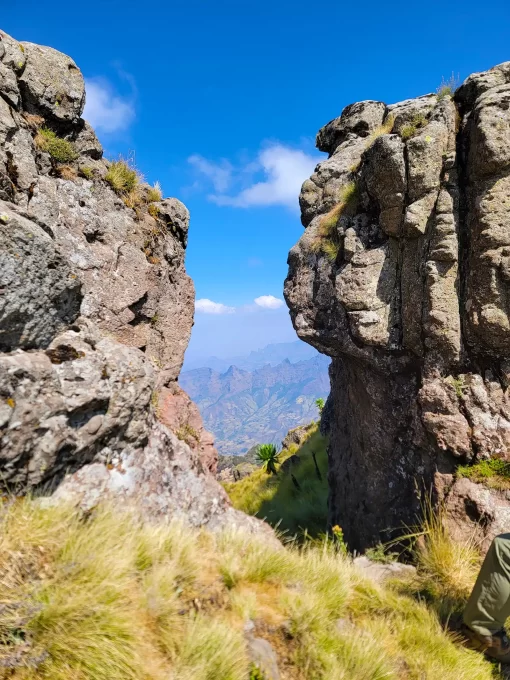
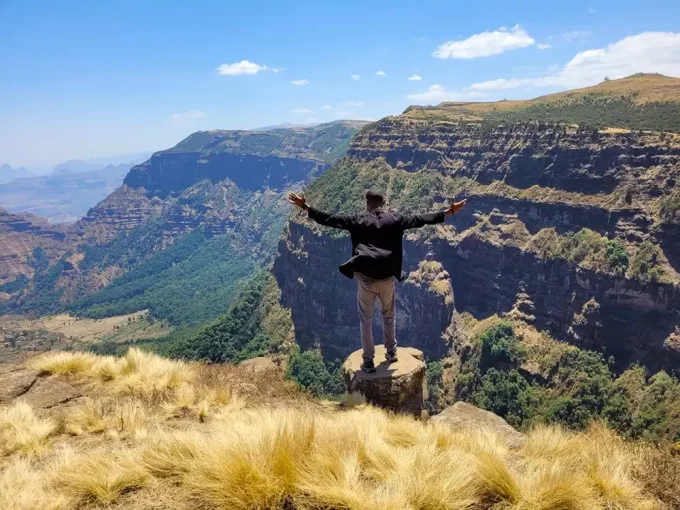
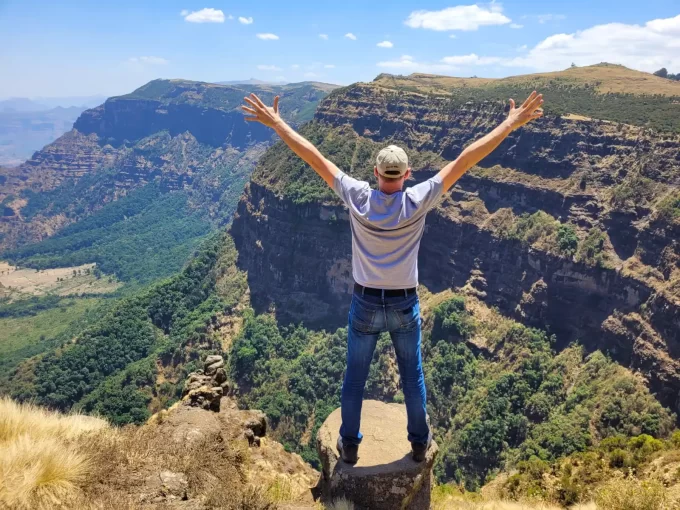
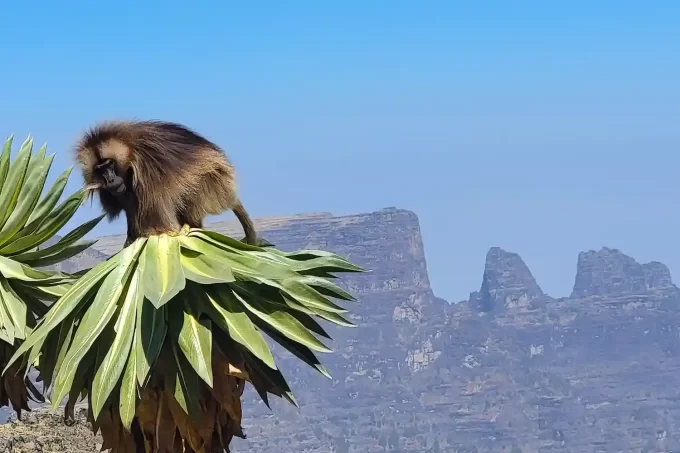
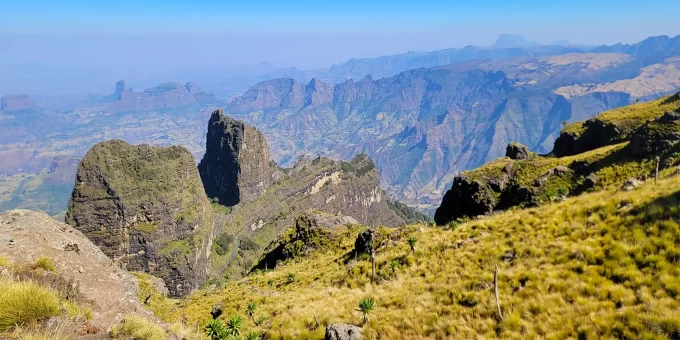
It is a journey through one of Africa’s most dramatic mountain landscapes—across enormous escarpments, remote highland villages, deep valleys and high-altitude grasslands where Geladas feed beside the trail and Walia ibex move across the cliffs.
The journey begins in historic Gondar and gradually takes you deeper into the Simien Mountains.
For several days, the mountain reveals itself slowly.
Then comes the summit. At about 4,550 metres, Ras Dashen is the highest point in Ethiopia. UNESCO identifies Ras Dejen as the highest point within the Simien massif and recognizes the park for its exceptional landscape and biodiversity.
But the summit is only one moment. The real adventure is everything it takes to get there.
At a Glance
- Duration: 10 days / 9 nights
- Destination: Simien Mountains, Ethiopia
- Summit: Ras Dashen / Ras Dejen
- Elevation: Approximately 4,550 m
- Starting point: Gondar
- Ending point: Gondar
- Trekking style: Multi-day high-altitude expedition
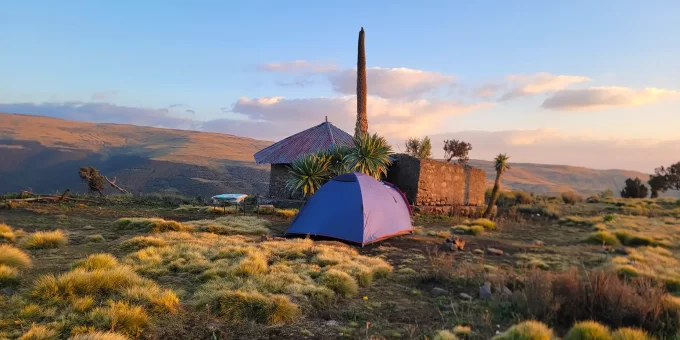
- Accommodation: Mountain camping during the trek
- Group style: Private or small group
- Difficulty: Challenging
- Best for: Active travellers, hikers and adventure travellers
Main highlights:
Ras Dashen • Imet Gogo • Chenek • Bwahit Pass • Gelada • Walia ibex • Highland villages • Simien escarpments • Remote valleys • Ethiopian mountain culture
Why Trek Ras Dashen?
There are easier ways to see the Simien Mountains.
- You can visit a viewpoint for a few hours.
- You can spend a couple of nights in the park.
- Or you can go deeper.
The Ras Dashen expedition is for travellers who want to experience the mountains from the trail—not just from a vehicle window.
Over ten days you have time to:
Walk along the dramatic escarpment
Watch Geladas in their natural environment
Search for Walia ibex
Experience highland villages
Cross high mountain passes
Camp in remote locations
Experience the changing landscape from west to east
Acclimatize progressively
Attempt the summit of Ras Dashen
See parts of the Simien that shorter trips cannot reach
The Simien landscape is recognized by UNESCO for its extraordinary cliffs, valleys and biodiversity. Some escarpments drop roughly 1,500 metres, while the park is home to species including the endemic Walia ibex, Gelada and Ethiopian wolf.
Detailed Itinerary
Day 1 — Gondar → Debark → Sankaber
Entering the Simien Mountains. Your adventure begins in Gondar.
We leave the historic city and travel north toward Debark, the main gateway to the Simien Mountains.
As the road climbs, the scenery begins to change.
The city disappears behind us.
Fields, villages and highland landscapes gradually replace the urban environment.
At Debark, we complete the necessary park arrangements before continuing toward Sankaber.
This is where the Simien begins to feel real.
In the afternoon, we take a first walk around Sankaber and along the escarpment.
The first views can be unforgettable: enormous valleys dropping away below you, jagged mountain formations stretching toward the horizon and the feeling that the landscape suddenly has no end.
As evening arrives, we settle into camp.
The first night is simple. Mountain air. A warm meal. A dark sky. And ten days ahead of you.
Driving: Approximately 3–4 hours
Trekking: Approximately 2–3 hours
Overnight: Camping at Sankaber.
Day 2 — Sankaber → Gich
Along the Edge of the Escarpment
Walking: Approximately 5–6 hours
Overnight: Gich
After breakfast, we begin our first full day on foot.
The trail follows the dramatic Simien escarpment through highland grasslands and farming areas. And somewhere along the trail, you may meet your first Geladas. You might see a few. Or you might suddenly find yourself surrounded by dozens—or even hundreds—of them. They feed on the grass, groom one another, call across the slopes and watch us pass.
We do not rush these encounters. One of the pleasures of walking in the Simien is that wildlife can become part of the trail itself.
We continue toward Gich, passing viewpoints and valleys along the way.
By afternoon, we reach camp. As the temperature drops, the mountains become quiet. Dinner is prepared by the trekking team, and the evening is spent beneath the Simien sky.
Overnight: Camping at Gich.
Day 3 — Gich → Imet Gogo → Saha → Gich
Where the Mountains Open
Walking: Approximately 5–7 hours
Overnight: Gich
Today is about views. We leave Gich and climb toward Imet Gogo, one of the most spectacular viewpoints in the Simien Mountains.
The trail passes through high-altitude vegetation before suddenly opening onto enormous panoramas.
Deep valleys. Vertical cliffs. Distant peaks. Tiny villages far below. And silence.
This is one of those places where photographs rarely feel large enough.
We take our time here.
There is no reason to hurry through one of the most beautiful landscapes in Ethiopia. After exploring the area, we return toward Gich. The afternoon gives us another chance to observe wildlife and enjoy the highland environment.
Overnight: Camping at Gich.
Day 4 — Gich → Inateye → Chenek
Deeper Into the High Simien
Walking: Approximately 6–7 hours
Overnight: Chenek
Today the landscape becomes increasingly rugged. We leave Gich and continue toward Inateye, moving through some of the highest sections of the Simien plateau.
The trail rises and falls across dramatic terrain. At viewpoints, the valleys seem almost impossibly deep. This is also excellent wildlife country. Keep your eyes open for Walia ibex among the rocky slopes.
Unlike Geladas, Walia ibex can be much more difficult to spot. Your guide will know where to look and, just as importantly, how to observe them without disturbing them.
Eventually we reach Chenek. For many travellers, Chenek becomes one of the defining moments of the trek. The scenery is enormous. The wildlife is close. And you are now deep inside the high mountains.
Overnight: Camping at Chenek.
Day 5 — Chenek → Bwahit Pass → Ambiko
Crossing the High Mountains
Walking: Approximately 7–9 hours
Overnight: Ambiko
Today is a serious mountain day.
We leave Chenek and climb toward the high Bwahit section, reaching elevations around 4,200 metres.
The air becomes thinner. The pace becomes slower.
And the mountain begins to demand more from you. This is where good preparation matters. We walk steadily rather than rushing, drink regularly and allow the body time to respond to the altitude.
The reward is the landscape. From the higher sections, the Simien unfolds around you in enormous layers of peaks, valleys and escarpments. Eventually the trail begins descending toward Ambiko.
Ambiko is important. This is where we prepare for the summit attempt.
After dinner, the guide will discuss the following day’s route, weather and departure time.
Tomorrow is the day we have been walking toward.
Overnight: Camping at Ambiko.
Day 6 — Ambiko → Ras Dashen Summit → Ambiko
Summit Day
Walking: Approximately 8–12+ hours round trip
Summit: Approximately 4,550 m
Overnight: Ambiko
We wake early. Very early. The camp is quiet as breakfast is prepared. Headlamps appear in the darkness. Then we begin.
The ascent from Ambiko is not a race. At this altitude, patience matters. We climb steadily, stopping when necessary and allowing everyone to find their rhythm. As daylight arrives, the mountains begin to appear around us.
The higher we climb, the more exposed the landscape becomes. And eventually, after hours on the trail, the summit comes into view.
Ras Dashen / Ras Dejen – The highest point in Ethiopia.
At approximately 4,550 metres, reaching the summit is a moment that belongs to you.
Maybe you celebrate. Maybe you take photographs. Maybe you simply stand quietly and look across the mountains. There is no correct reaction. You have spent days walking toward this place. You have crossed valleys. Climbed ridges. Slept in mountain camps. Walked through communities. And now you are standing at the highest point in Ethiopia.
After spending time at the summit, we begin the long descent back toward Ambiko. It can be a tiring return, but the feeling is different now. The objective has been achieved.
Overnight: Camping at Ambiko.
Day 7 — Ambiko → Sona
Beyond the Summit
Walking: Approximately 5–7 hours
Overnight: Sona
Today we leave Ambiko. The summit is behind us, but the expedition is not finished. We continue eastward through remote sections of the Simien. The pace is more relaxed after the summit day. The landscape gradually changes as we descend.
You begin to notice differences in vegetation, temperature and settlement. And you begin to see another side of the Simien.
These mountains are not an empty wilderness. People live here. Families farm here. Children walk these trails. Livestock moves through the valleys. For generations, communities have adapted their lives to this demanding landscape.
That human story is part of the Simien too.
Overnight: Camping at Sona.
Day 8 — Sona → Mekarebya
The Remote Side of the Simien
Walking: Approximately 5–7 hours
Overnight: Mekarebya
We continue through the eastern Simien. The trails become quieter. The scenery remains dramatic, but the feeling changes. There are fewer travellers. More local life. More open countryside. This is one of the reasons we prefer a longer Ras Dashen itinerary.
You are not simply travelling to a summit and immediately leaving. You have time to experience the mountain landscape as a complete journey. Along the trail, we may meet local farmers and villagers going about their daily lives. These are not performances for tourists. This is simply life in the highlands.
We continue to Mekarebya and settle into camp.
Overnight: Camping at Mekarebya.
Day 9 — Mekarebya → Mulet
From High Mountains Toward the Lowlands
Walking: Approximately 5–6 hours
Overnight: Mulet
The journey continues. The landscape gradually begins to feel warmer and lower. After so many days among high peaks, the change is noticeable. This is also a day to slow down. Look back. Think about the summit. Think about the people you met.
Think about the first morning in Gondar and how far you have travelled since then.
By afternoon, we arrive at Mulet. Our final night in the mountains is a chance to enjoy one last evening with the trekking team.
Overnight: Camping at Mulet.
Day 10 — Mulet → Adi Arkay → Gondar
Leaving the Mountains
Trekking: Approximately 2–4 hours, depending on the final route
Driving: Approximately 4–6 hours, depending on road conditions
After breakfast, we complete the final section of trekking. Our vehicle meets us according to the agreed route. The journey back toward Gondar becomes a gradual transition from wilderness to civilization. The mountains slowly move behind us. Villages become larger. Roads become busier. And eventually we arrive back in Gondar. The trek is over.
But hopefully, the Simien is not something you simply leave behind. It stays in the photographs. In the cold mornings. In the Geladas beside the trail. In the people you met. In the silence of the high escarpments.
And in that moment when you stood on Ras Dashen.
Included
We believe the price should be transparent.
Transportation
- Private ground transportation between Gondar and the Simien Mountains
- Transportation required for the agreed trekking route
- Experienced local driver
- Fuel and normal vehicle costs for the planned itinerary
Trekking Team
- Professional English-speaking trekking guide
- Required Simien park scout
- Trekking cook
- Mule handlers
- Pack mules for agreed equipment, food and luggage
- Current trekking operators commonly use this same support structure for Ras Dashen
- expeditions.
Park & Trekking Logistics
Simien Mountains National Park entrance fees
Camping fees
Required park/scout arrangements
Trekking logistics and local coordination
Camping
Tents
Sleeping mattresses
Cooking equipment
Dining/camp equipment
Kitchen supplies
Camp setup and breakdown
Meals
Breakfast
Lunch
Dinner
Tea and coffee during the trekking section
Basic trekking snacks according to the confirmed itinerary
Water
Drinking water according to the confirmed package
Local Support
Pre-trek briefing
Route planning
Trekking logistics
Local cultural interpretation
Wildlife interpretation
Emergency coordination in the event of a serious problem
Your exact inclusions will always be listed on your final quotation.
Excluded
- Flights
International flights
Domestic flights such as Addis Ababa–Gondar–Addis Ababa
Travel Documents
Ethiopian visa
Passport fees
Other personal travel-document expenses
Insurance
Travel insurance
Medical insurance
Evacuation insurance
We strongly recommend insurance that specifically covers trekking and the activities you plan to undertake.
Medical & Emergency Costs
Personal medical treatment
Hospital costs
Medication
Emergency evacuation
Specialist rescue costs
Personal Equipment
Hiking boots
Personal clothing
Warm layers
Waterproof clothing
Gloves
Hat
Sunglasses
Sunscreen
Personal backpack
Personal medication
Headlamp
Personal water bottle/hydration system
Personal Expenses
Alcoholic drinks
Extra drinks
Personal snacks outside the agreed package
Souvenirs
Laundry
Telephone/data costs
Personal shopping
Unplanned hotel nights
Other personal purchases
Tips
Tips are not included.
If you believe the trekking team has done an excellent job, gratuities are appreciated but completely discretionary.
Hotels
Accommodation before or after the trek is not included unless specifically stated in your quotation.
Anything Not Listed
If something is important to you, ask before booking.
If it is not clearly listed as included in your confirmed quotation, please consider it excluded.
That keeps everything transparent.
Difficulty & Fitness
Is Ras Dashen difficult?
Yes.
We would rather tell you honestly than make the trek sound easier than it is.
Ras Dashen is a challenging high-altitude trekking expedition.
You do not normally need technical mountaineering equipment for the standard route, but the combination of long trekking days, altitude, steep terrain, cold nights and consecutive days on foot makes this a serious adventure. Current operator descriptions similarly identify the summit day as particularly demanding, with some itineraries reaching 10–12 hours of walking.
You should be comfortable with:
Walking for several hours
Uphill and downhill terrain
Consecutive trekking days
Cold nights
Basic camping
High-altitude conditions
You do not need to be an elite athlete.
But you should arrive prepared.
Altitude
Altitude affects everyone differently.
Being physically fit does not guarantee that you will have no altitude symptoms.
Our itinerary is designed to build gradually toward the higher sections, but no guide can guarantee how your body will react.
If you experience concerning symptoms, tell your guide immediately.
The summit is never more important than your safety.
If conditions or your health make the summit unsafe, turning around is the correct decision.
What Happens If I Don’t Reach the Summit?
You return safely.
That is the priority.
Weather, altitude, illness or exhaustion can make a summit attempt unsafe.
We will never encourage a client to continue simply because the itinerary says “summit day.”
A mountain will still be there.
Your safety comes first.
What to Pack
Essential
Passport
Travel insurance details
Broken-in hiking boots
Warm jacket
Fleece
Thermal/base layers
Waterproof jacket
Trekking trousers
Warm hat
Gloves
Warm socks
Sunglasses
Sunscreen
Headlamp
Reusable water bottle
Personal medication
Small daypack
Recommended
Trekking poles
Camera
Binoculars
Personal snacks
Power bank
Spare batteries
Extra socks
Lightweight towel
Hand sanitizer
Wet wipes
Small personal first-aid kit
Important: Mountain nights can be very cold. Do not pack only for the daytime temperature in Gondar.
Wildlife
The Simien is not only about mountains.
It is also a remarkable wildlife destination.
Gelada
One of the most memorable encounters on the trail.
Geladas are endemic to the Ethiopian highlands and are often seen feeding in large groups around trekking routes.
Walia Ibex
The Walia ibex is found nowhere else in the world and is one of the defining animals of the Simien.
Chenek and the surrounding high mountain areas are particularly interesting for wildlife observation.
Ethiopian Wolf
The Ethiopian wolf is rare and elusive.
A sighting is never guaranteed.
If you see one, it is a special moment.
Birds
The Simien also supports a variety of highland and raptor species.
Bring binoculars if wildlife and bird photography interest you.
Frequently Asked Questions
Do I need a guide?
For this expedition, yes—we strongly recommend travelling with a professional local guide.
The park also requires a scout for trekking arrangements.
Our guide handles route planning, communication, logistics and local interpretation while the scout provides the required park support.
Do I need previous trekking experience?
Previous hiking experience is recommended but technical climbing experience is not normally required.
If you regularly hike or walk long distances, you will have a much better starting point.
Is Ras Dashen a technical climb?
The standard trekking route is generally considered high-altitude trekking rather than technical mountaineering.
You do not normally need ropes, crampons or an ice axe.
However, there are steep and demanding sections, and conditions can change.
How long is summit day?
Expect a long day.
Depending on route, weather, pace and conditions, the summit day can take approximately 8–12+ hours round trip.
We start early to give the group sufficient time.
Where do we sleep?
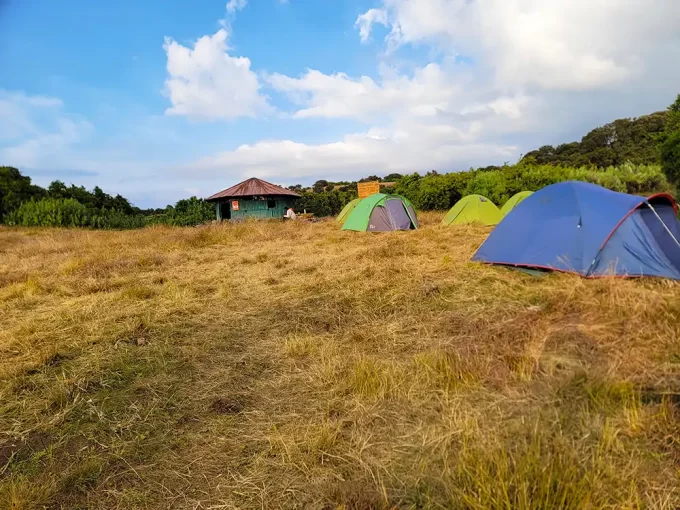
Mountain camping is used during the trekking section.
Camps are basic.
This is an expedition, not a luxury lodge trek.
Are showers available?
Do not expect regular hot showers in the mountains.
Facilities are basic and vary by camp.
We recommend arranging a hotel before and/or after the trek if a comfortable shower is important to you.
What food will we eat?
Our cook prepares practical trekking meals such as:
Pasta
Rice
Potatoes
Vegetables
Eggs
Bread
Soups
Beans/lentils
Meat where appropriate
Fruit
Tea and coffee
Dietary requirements should be communicated before departure.
Can you accommodate vegetarian or vegan travellers?
Yes.
Tell us before the trek so the cook can plan appropriately.
Can I bring my own snacks?
Absolutely.
Energy bars, chocolate, nuts, dried fruit and other personal snacks are useful during long trekking days.
Is drinking water provided?
Water arrangements depend on your confirmed package.
We will explain exactly how drinking water will be handled before departure.
Do not assume untreated natural water is safe to drink.
Is there mobile phone signal?
Coverage can be limited and inconsistent.
Do not rely on continuous internet access during the trek.
Bring a power bank and inform family or friends that you may be offline.
Can I charge my phone?
Do not depend on electricity.
Bring a power bank and spare batteries for cameras and other devices.
Can I bring a camera?
Definitely.
The Simien is a photographer’s dream.
Bring extra batteries, memory cards and protection from dust and rain.
Will I see Geladas?
There is a strong opportunity to encounter Geladas along several trekking sections, but wildlife is never guaranteed.
We observe animals respectfully and do not disturb them.
[9/8/2026 11:20 PM] Tesema Ethiopia Tours: Will I see Walia ibex?
There are opportunities, particularly around high mountain areas such as Chenek.
Your guide will help you search for them.
But again, wildlife remains wild.
Can I see an Ethiopian wolf?
It is possible, but sightings are unpredictable.
Do not book the trek expecting a guaranteed wolf sighting.
Can I do the trek in fewer days?
Shorter itineraries are possible.
However, we do not recommend reducing the expedition simply to make it faster.
A longer itinerary gives you more time to experience the Simien and manage the physical demands of the journey.
Can I make it longer?
Yes.
We can add:
Extra acclimatization
Additional wildlife days
More viewpoints
Village experiences
Gondar sightseeing
Lalibela
Axum
Additional camping
Cultural experiences
Can I combine Ras Dashen with Gondar?
Absolutely.
We strongly recommend adding time in Gondar.
Gondar is the historic gateway to the Simien and has its own extraordinary cultural heritage.
What if I get sick?
Tell your guide immediately.
We assess the situation and prioritize your safety.
Depending on the circumstances, the itinerary may be modified, you may descend to a lower elevation, or transportation/medical assistance may be arranged.
Travel insurance is strongly recommended.
What if the weather becomes dangerous?
The itinerary can be adjusted.
We may:
Change the departure time
Wait for safer conditions
Modify the route
Shorten the day’s walk
Stay longer at camp
Cancel the summit attempt if necessary
Safety comes before the itinerary.
Responsible Travel
The Simien Mountains are home—not simply a tourist attraction.
We believe travelling here should benefit both the environment and local communities.
We aim to:
Work with local trekking staff
Respect local communities
Minimize unnecessary waste
Avoid disturbing wildlife
Follow park regulations
Respect local customs
Keep trekking areas clean
Support local services where possible
The Simien is internationally important for both landscape and biodiversity, including endemic and threatened wildlife.
We want future travellers to experience the same mountains.
Why Travel With Simien Ethio Tours?
Local knowledge matters.
We are not selling the Simien from a distance.
We are a locally based Ethiopian trekking company focused on the Simien Mountains and northern Ethiopia.
Our approach is simple:
Good planning. Honest information. Local knowledge. Personal service.
We don’t want to promise you an unrealistic mountain experience.
We want you to arrive prepared.
We want you to understand the difficulty.
We want you to know what is included.
And when you finally stand on Ras Dashen, we want you to know exactly how you got there.
Your Mountain. Your Pace. Your Story.
This expedition can be organized for:
Solo travellers
A private journey with your own guide and trekking team.
Couples
A personal mountain experience without joining a large group.
Friends
A private adventure designed around your group.
Small groups
A shared expedition with friends, family or other compatible travellers.
Custom expeditions
More days, different routes, extra wildlife time or additional destinations.
Before You Book
Ras Dashen is right for you if:
✓ You enjoy hiking
✓ You want a genuine mountain experience
✓ You can walk for several hours a day
✓ You are comfortable with basic camping
✓ You understand that altitude can affect anyone
✓ You want wildlife and scenery
✓ You want to experience local mountain communities
✓ You are prepared for cold nights
It may not be right for you if:
✕ You dislike walking
✕ You expect luxury accommodation throughout
✕ You want a guaranteed summit regardless of conditions
✕ You are uncomfortable camping
✕ You are looking for a quick sightseeing excursion
✕ You are unwilling to prepare for altitude and cold weather
If you are unsure, contact us.
We would rather recommend the right itinerary for you than sell you the wrong one.